Jasper Wildfire Analysis
Media Platform
Comprehensive analysis of the Jasper wildfire using satellite imagery and OSINT techniques.
Jasper Wildfire Analysis
About this project
The 2024 Jasper wildfire became one of Canada’s most devastating natural disasters, burning approximately 39,000 hectares, destroying 358 structures, and forcing the evacuation of more than 25,000 people. The wildfire developed rapidly under extreme wind and dry conditions, resulting in highly dynamic fire behaviour and frequent changes in fire perimeter. These conditions created significant challenges for real-time assessment using traditional ground and aerial methods. As a result, timely geospatial intelligence (GEOINT), including satellite imagery, played a critical role in providing broad-area situational awareness, supporting damage assessment, and informing operational planning.

The challenge
Multiple lightning-ignited fires north and south of Jasper expanded rapidly under extreme wind and dry conditions, allowing individual fire fronts to merge and accelerate across forested terrain. Rapid changes in weather and fuel conditions contributed to highly dynamic fire behaviour and frequent shifts in the active fire perimeter.
- Fire progression shifted on an hourly basis as wind direction and intensity changed, while dense smoke and reduced visibility significantly limited the reliability of aerial assessments and visual reconnaissance.
- Critical infrastructure, including healthcare facilities, water systems, rail corridors, and major highways was intermittently threatened as fire boundaries evolved, requiring sustained monitoring of areas at risk.
- Public agencies required near-real-time fire detection, burn-scar mapping, and analysis of potential structural impacts to maintain situational awareness and support response and recovery planning.

Our contribution
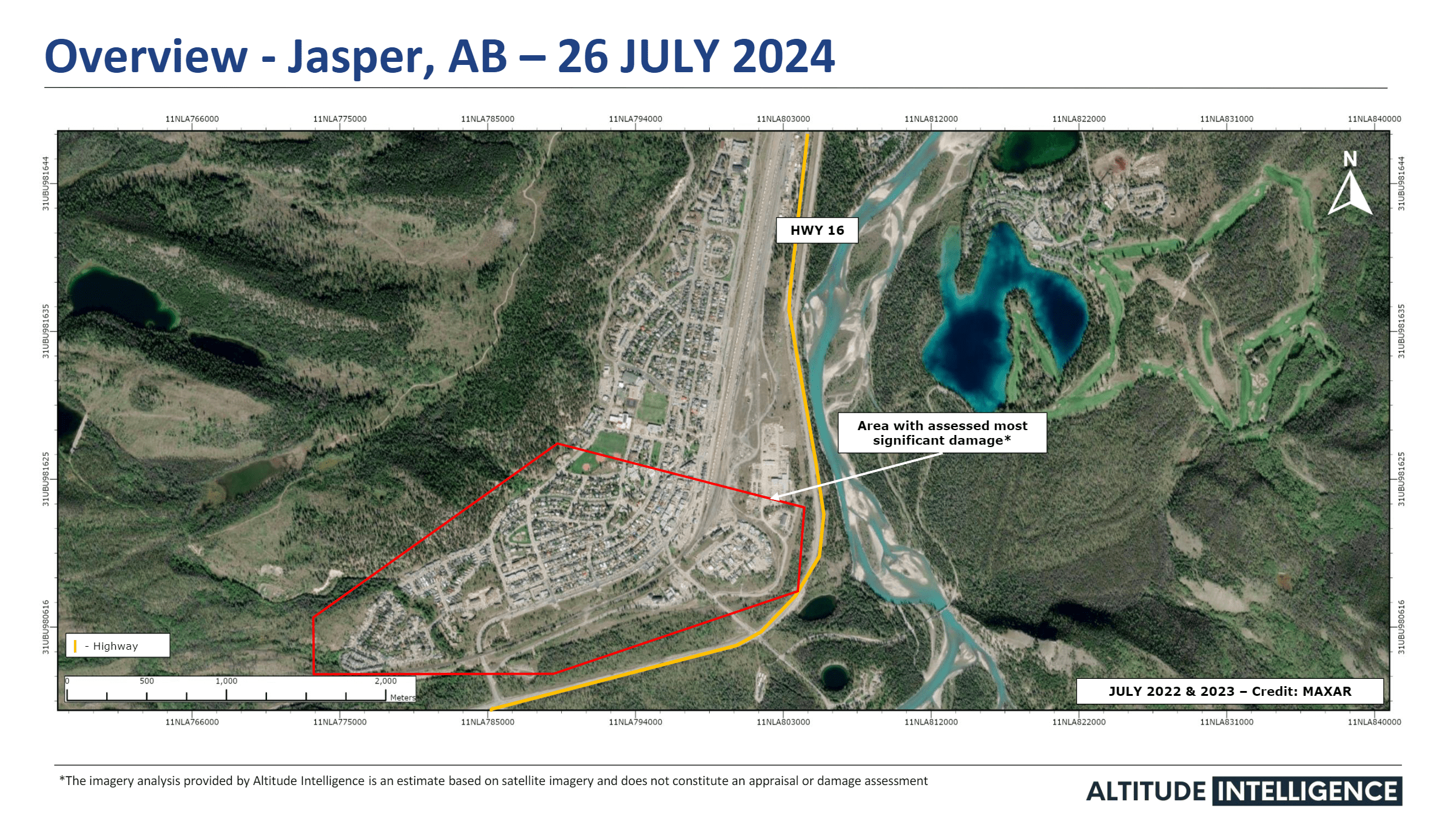
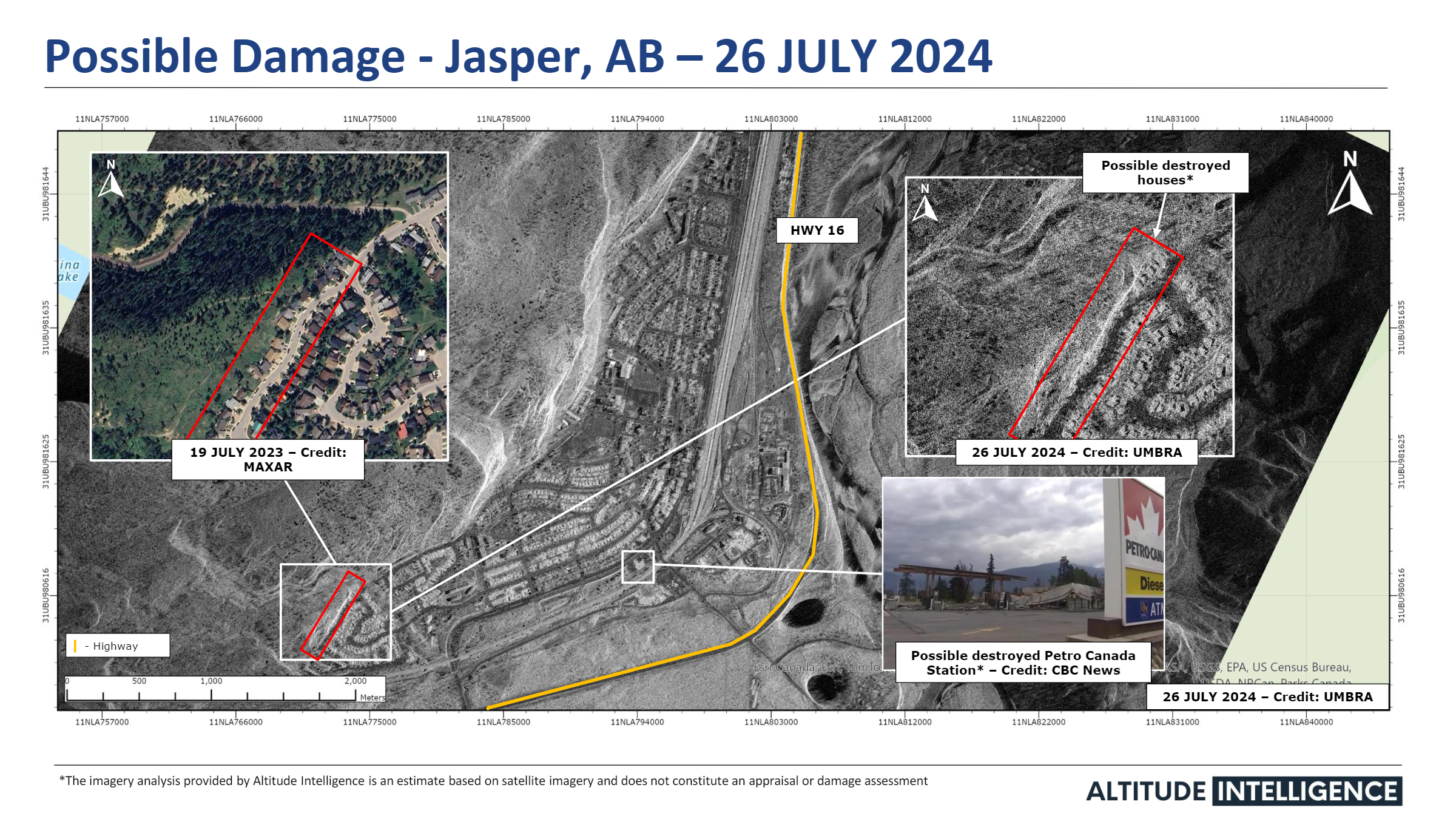
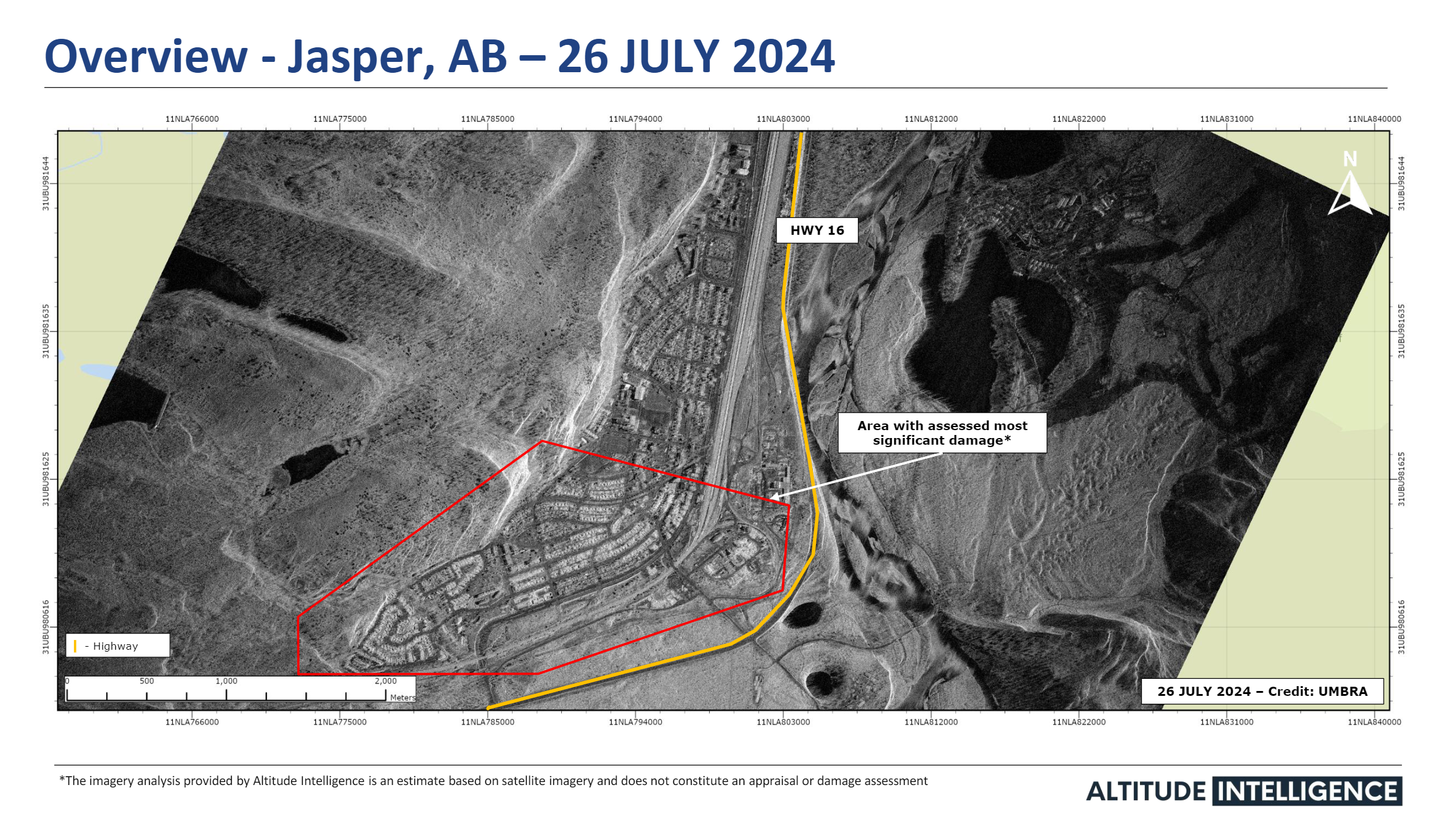
Conducted satellite imagery analysis and delivered several damage assessment reports examining wildfire impact across the Jasper area. These reports documented visible indicators of burn severity, surface change, and potential structural impact based on interpretation of commercially available satellite imagery.

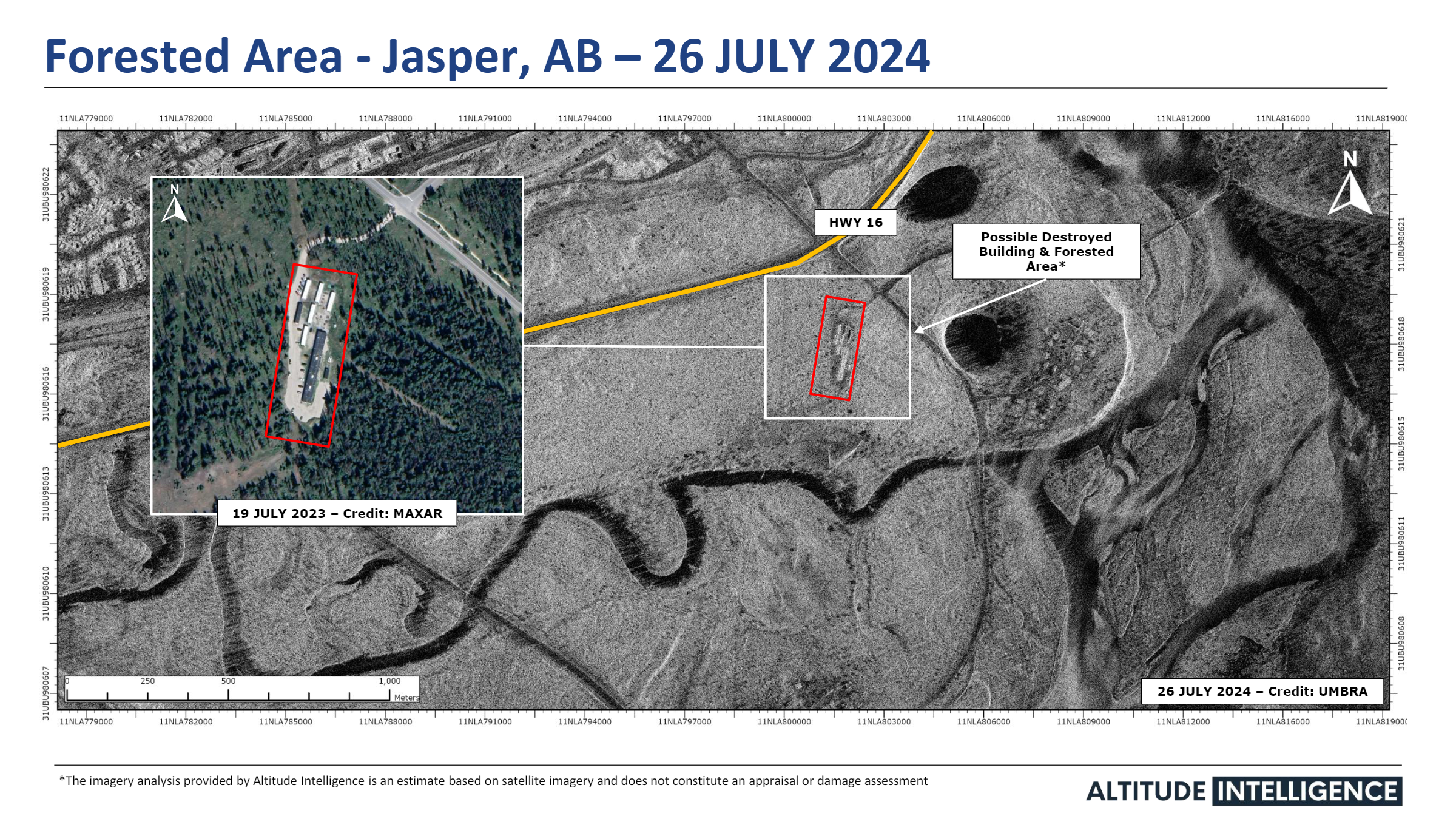
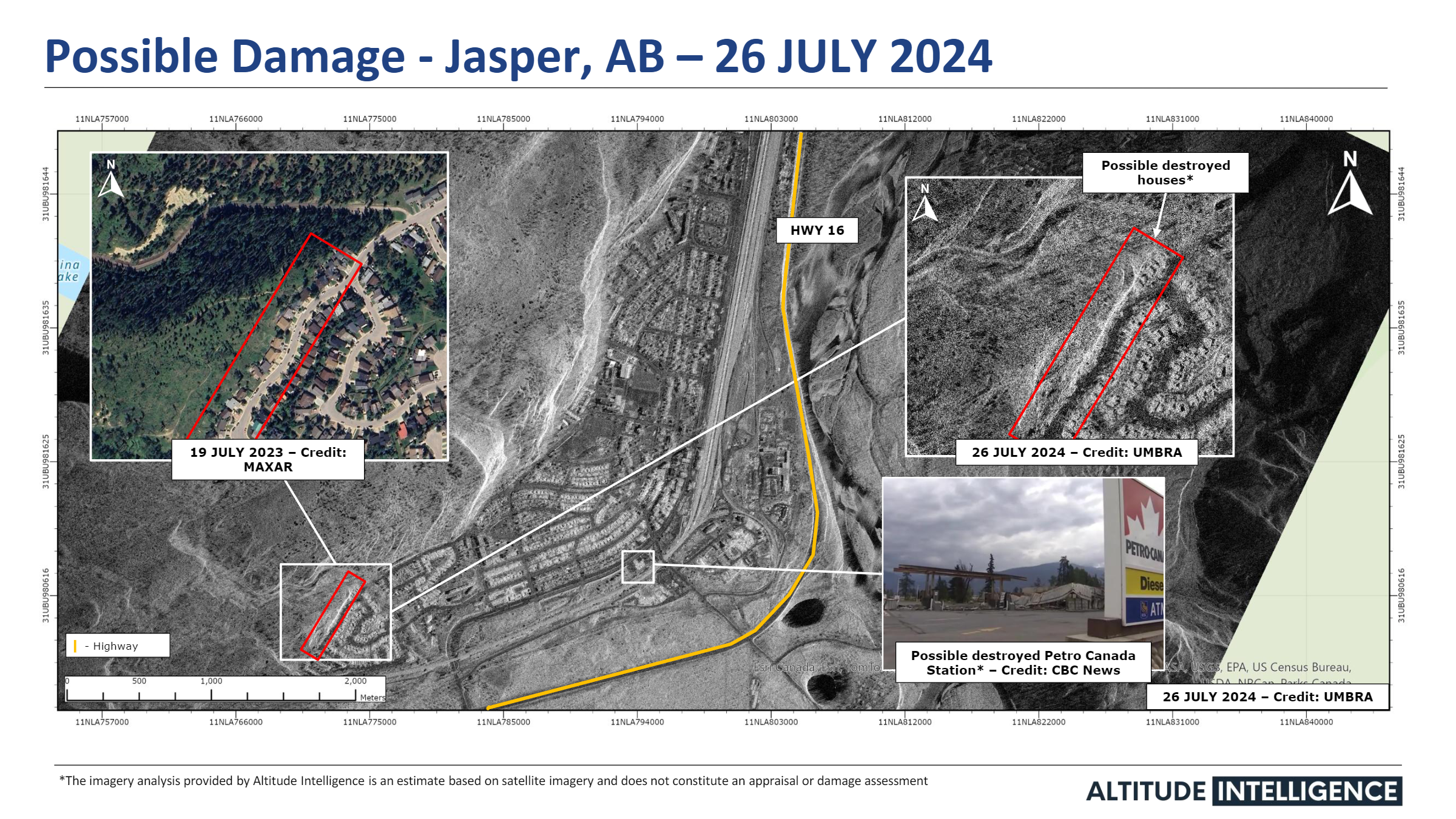
Forested area damage assessment
Possible damage was observed affecting properties, residential housing, and nearby infrastructure, including a petrol station, based on visible changes detected in satellite imagery. These indicators are consistent with wildfire impact but do not constitute a confirmed or on-site damage assessment.

Altitude Intelligence specializes in satellite imagery analysis and geospatial intelligence using commercially available data sources. Due to confidentiality, sensitivity, and client-specific requirements, many analyses and case studies cannot be fully disclosed publicly. The material presented here represents only a subset of Altitude Intelligence’s analytical capabilities; organizations seeking additional information or tailored geospatial intelligence support are encouraged to contact Altitude Intelligence directly.